Code: AM292
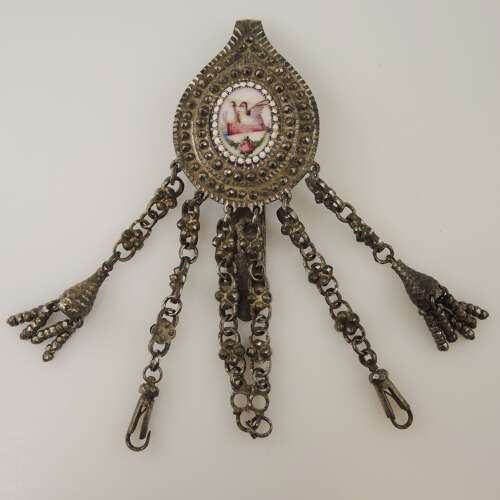
This is an early cut steel watch chain which has a central plaque with steel tongue decorated with Woodstock cut steel - small to middle size facet cut balls and beads and wire work. For a more detailed description of Woodstock cut steel, see below.
This plaque is also decorated with an oval enamel plaque of two love birds – this scratched and chipped
Hanging from this two lengths of chain with steel tassles and two shorter lengths with steel dog clips. Plus two other links which join together on a three way link but need a dog clip or something similar attached here
The chain measures 112mm from end to end and is 37mm wide.
The chain is in 90% mint condition – some damage to the enamel plus in need of a terminating loop or clip
Today no one has heard of the remarkable 18th century polished steelwork for which Woodstock was once famous. It was reputedly made from horseshoe nails reworked to make delicate faceted studs, cut like diamonds and highly polished they were used to decorate watch chains, buckles, scissors, buttons, and other items. Cut-steel short swords were particularly sought after. Sold locally, but also in London its international reputation was spread by fashionable tourists visiting Blenheim Palace. In 1742 Horace Walpole sent Woodstock steel wares to the British Consul in Florence requesting that they be given as diplomatic gifts. In 1759 buckles were ordered for the King of Prussia and in 1768 the King of Denmark, on a visit to Blenheim, also bought steel. The early 18th century origins of the industry are obscure and within less than a hundred years it had disappeared entirely in the face of competition from the Birmingham manufacturers.